
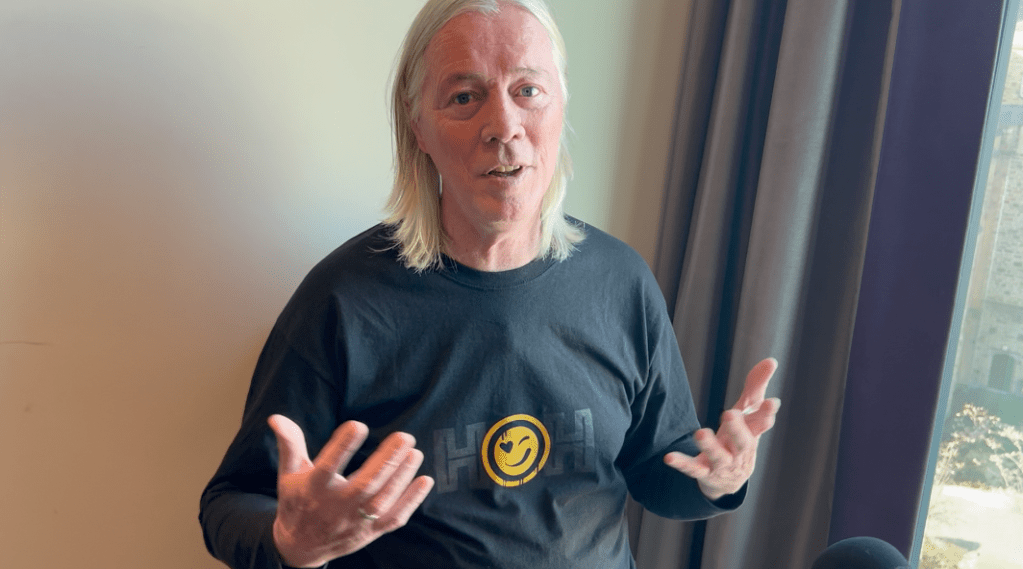
A flustered, long-haired Scotsman approached, crossing the road whilst still mid conversation on the phone. It is clear Tommy has always been on the go- even after 40 years.
The streets he knew well, even with a new block of industry ahead- Tommy knew where he was going and he still does now.
The phone call ended and Tommy Smith smiled, turning back towards me; ready to spill all his secrets to the beat of truth.
Speaking to me in the run-up of his brand new event ‘Bedlam’ – it’s inspired him to look back at a time when rave culture was about more than just music; a time when politics, culture and drugs came together to form something new, something vital – and even dangerous.
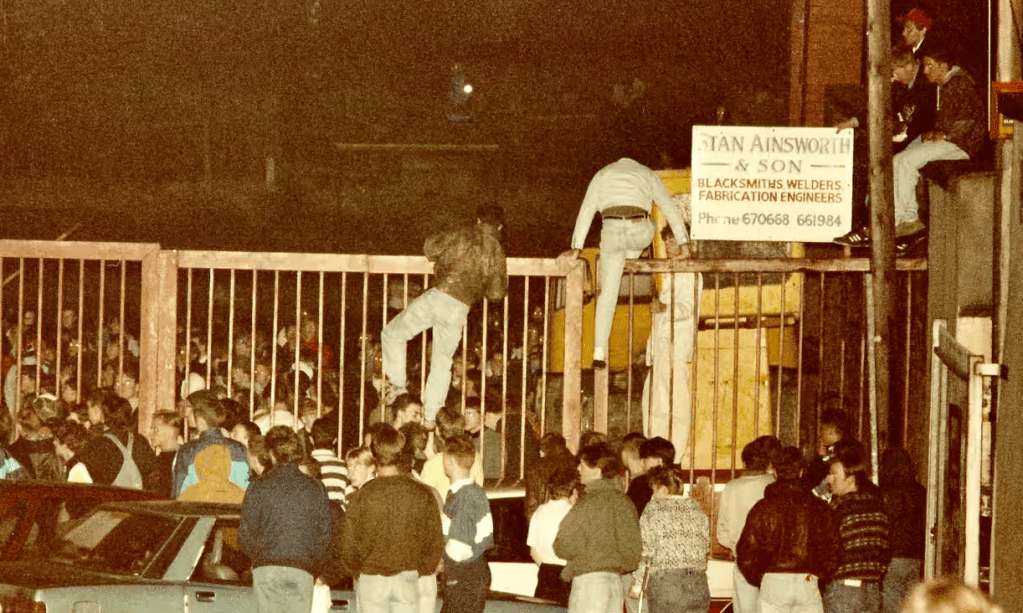
In the late 1980s, the post-industrial North-West town of Blackburn became an unlikely mecca for Britain’s underground rave revolution. This revolution is still on going today- with an event upcoming next week.
As the government and media cracked down on illegal parties in cities like Manchester, thousands of young people flocked to Blackburn’s abandoned warehouses and fields, drawn by the pulsating rhythms of acid house and a spirit of revolt.
Massive, unlicensed gatherings were soon to become a shining beacon of working-class rebellion, daring both the authorities and a society (that seemed to have forgotten about them) to listen.
Some of the most significant gatherings included Tommy’s own, one being Unit 7 in Haslingden which saw over 10,000 people attend.
One DJ, Nigel Gilmartin, told The Guardian that he “knew something was happening” when he first stepped foot in Blackburn. It was really creating something special, and that still lives on today.
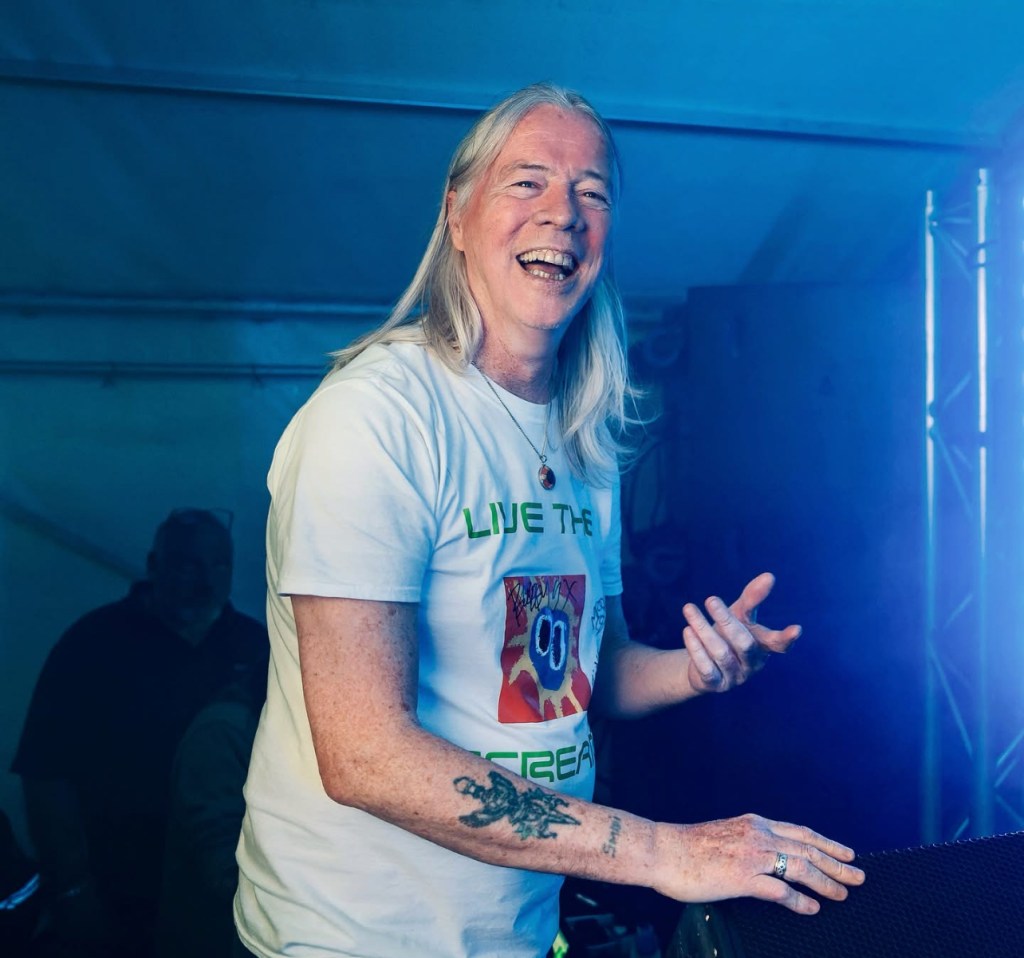
Even now, nearly 40 years later, the permanent legacy of Blackburn’s Acid House scene still pulses through the veins of British dance culture. An era when big beats, piano chimes, community, and rebellion all became one; all to the beat of a new euphoric sound which is still on repeat.
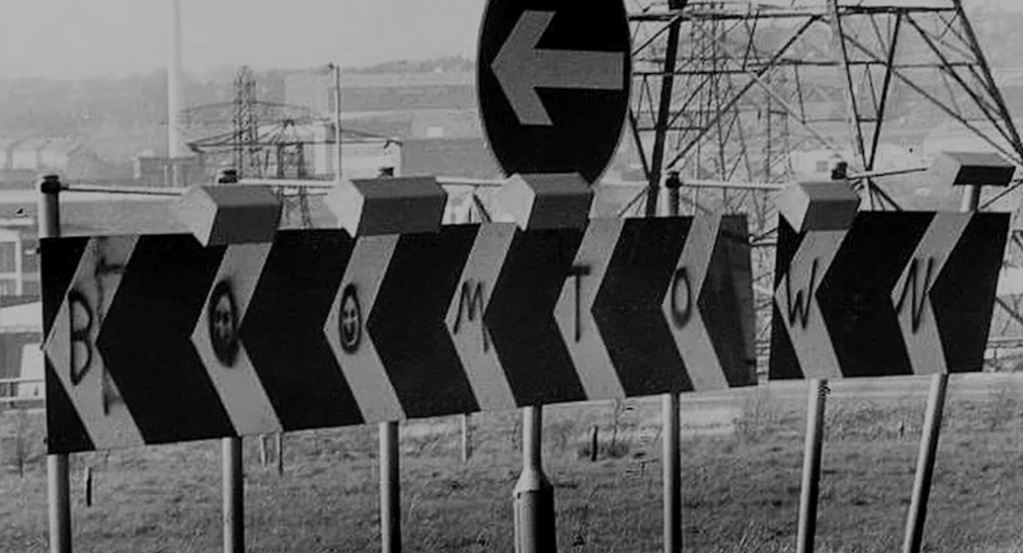
Tommy Smith, alongside friends Tony Creft and Neil Shackleton, begin a mission; a movement. Just three of the musketeers of dance who pioneered a D.I.Y culture which has never been forgotten.
Tommy said, “Before in the cotton mills, people sweated their life away and all they got was a sore back and fuckin’ injuries. We were back in the mills, two generations later, sweating away – but for a different reason.”
“On the holy day (the day of Sabbath) we were gathered in our church, and we are reaching our highs and reaching for our Gods.”
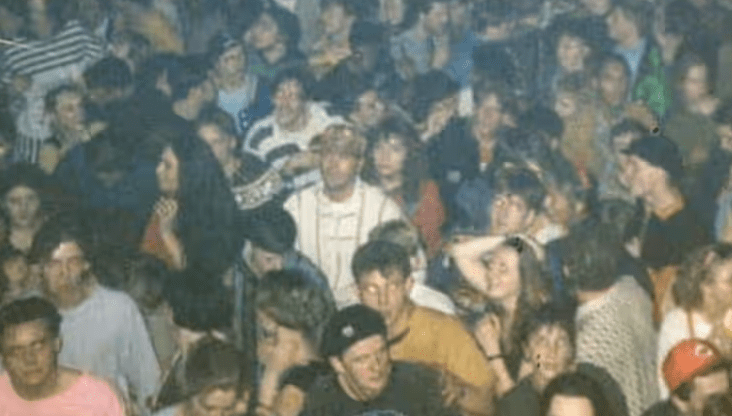
“That’s what we were hoping for. A brave new world, a bright new future.”
Click on the video below to hear more:
The parties started at places like Blackburn’s very own Sett End bar- where around 100 of the community would turn up, ready to dance all night long to a beat of change.
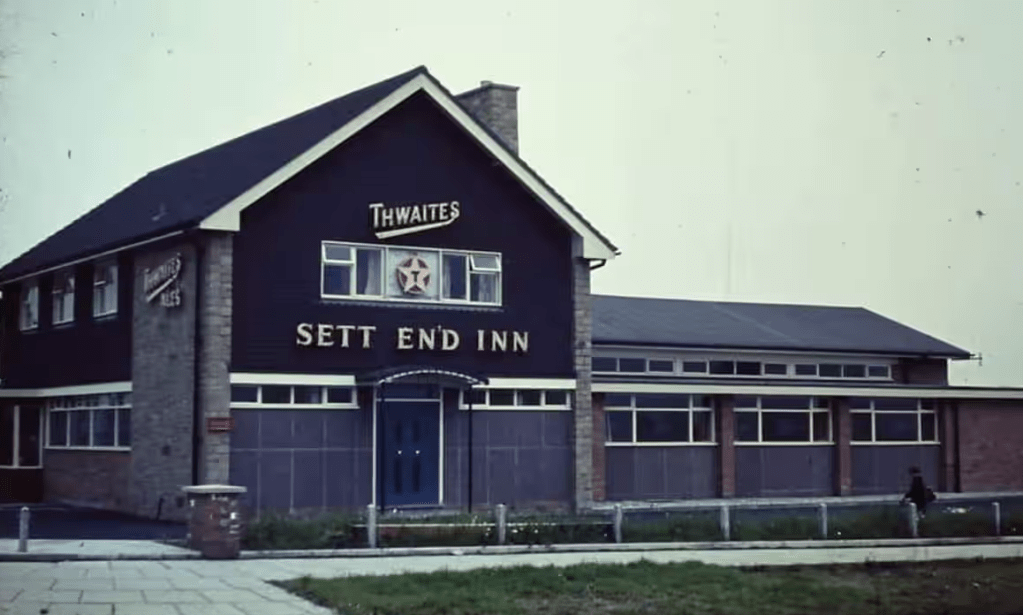
The Sett End, or previously known as The Red Parrot, became a hotspot for all the party go-ers and organisers- the ‘go-to’ before the illegal party.
One of the regulars to the ‘Boomtown’ scene was a very young 14 year old Charlotte Cowell, who despite her age says never experienced anything but joy at the time.
She recalled her first time being in the Sett End, in 1988:
“It was like walking into another universe. I swear to god! Everyone was just going absolutely mental, horns going off, shirts off. Music so loud- you just wouldn’t even believe it!”
“I was like- oh my god! This is what I’ve been missing my entire life. That’s it. I’m home. That’s it.”
Click below to hear more:
After a decade of social upheaval and more social division than ever made before (thanks to Thatcherism) alongside the closing of industries, and policies such as Section 28- more people were conditioned to crave that new rebellion.
This act of rebellion, despite its significance, has always been intertwined within UK culture – bridging the gap between music and politics. Here are some more notable instances of this:
Due to the politics at the time, around the ‘second summer of love’ these parties meant more than just ‘taking a pill with your mates‘- it was a clear stance against authority and day to day regime.
Journalist and writer of ‘Party Lines’ Ed Gillett, spoke about the context of the Acid House movement in further detail:
“A lot of young people were lacking, not only optimism but also kind of material direction in their lives. Unemployment rose dramatically during the 1980s, a lot of previously industrial spaces had been emptied out so there was a real shift.”
With more and more people driving down their motorway to join this youth movement, at the next junction there was inevitably more obstacles in the way (and it was not just police road blocks).
Authorities, as well as gangs coming from all over the UK, soon found their own way to the party (un-inivited of course) trying to make profit off Tommy and his crew, as well as take over the parties themselves.
Soon after Tommy sent a letter around, to keep his parties sacred.
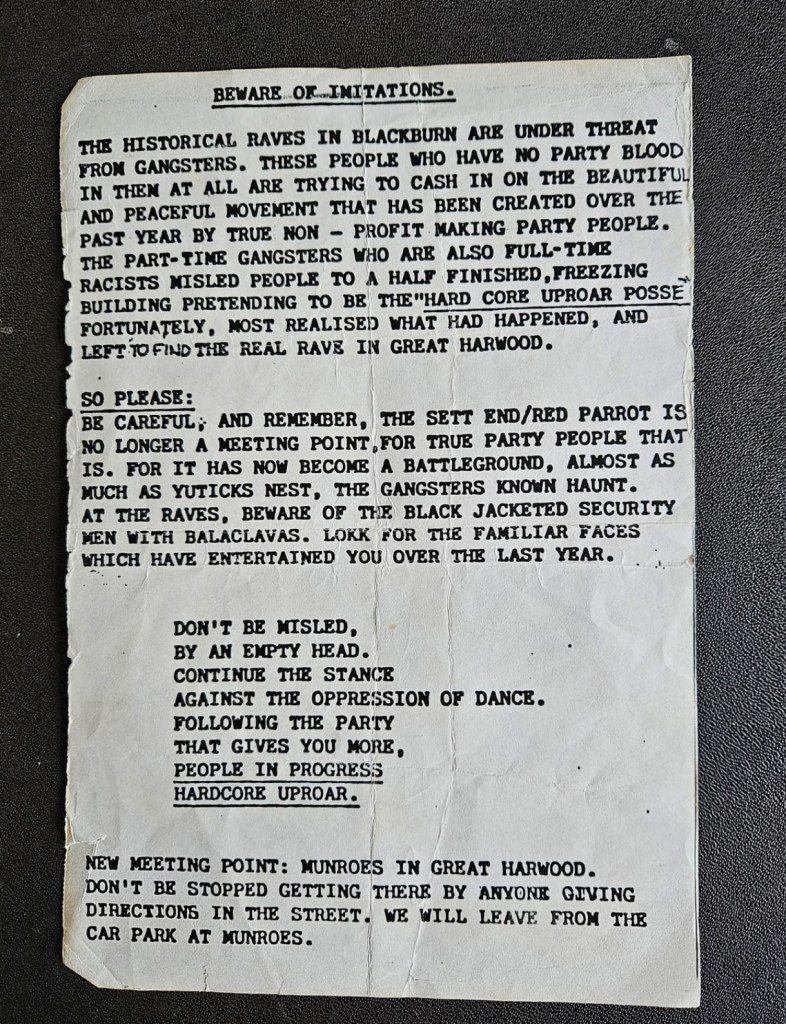
“Continue the stance against the oppression of dance. Following the party that gives you more, people in progress hardcore uproar.”
That was the end of a meeting place at Sett End, but a bar named Monroes then came- this pattern fell suit to the movement- always changing, never ending.
Tensions between the police, local authorities, and the party community escalated as law enforcement saught to end to these gatherings.
Even Tommy was arrested on suspicion of supplying Class A drugs. He was held on remand for a year before ultimately being found not guilty.
A police spokesperson at the time, told the Lancashire Evening Telegraph,
“This should serve as a clear warning to those involved in organising these unlawful gatherings. We will now be pursuing enforcement through the courts to deter future events.”
It was not over just yet…
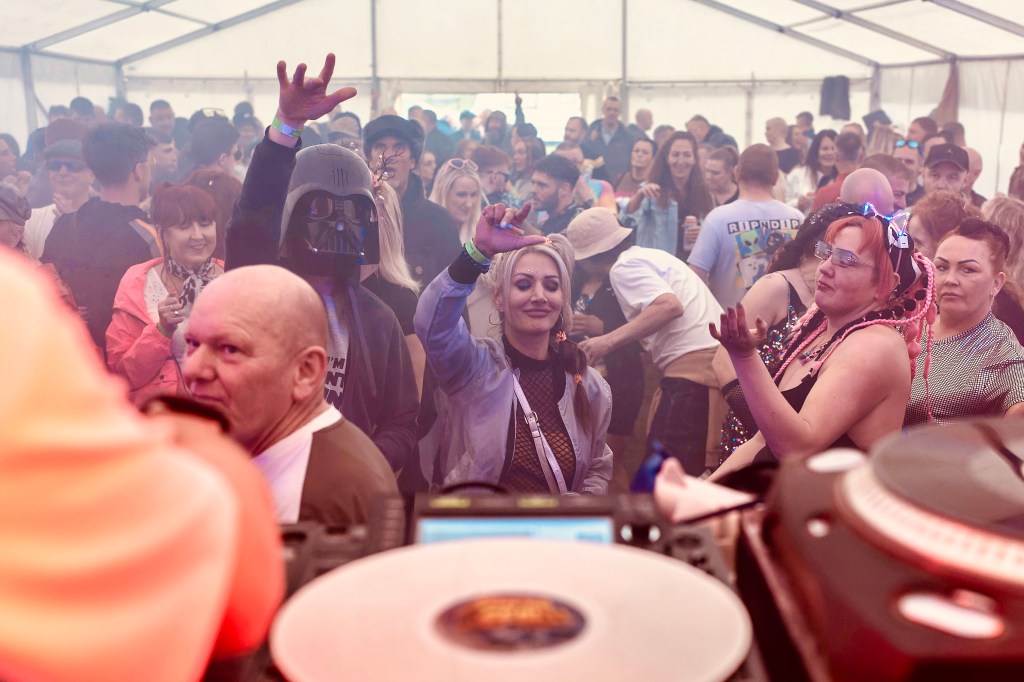
One of the last events that took place was in Darwen, only last year. The event called ‘High On Hope’ involved the next generation of party go-ers.
A ticketed event, which was advertised months before, seems like a complete shift from chaos of the past; but the stance stays the same. A shared collective of like-minded people, here for a good time and searching for unity.
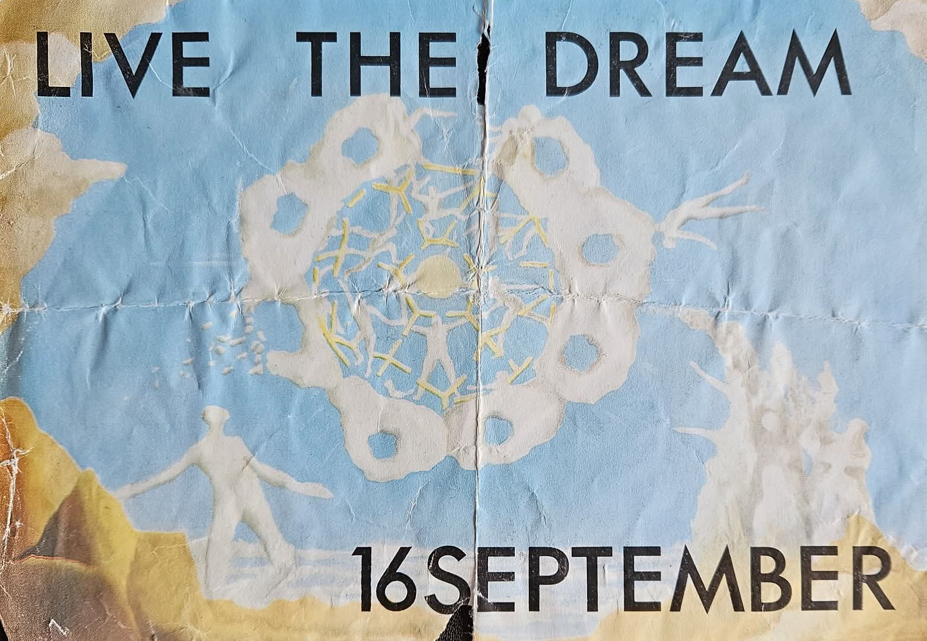
The next event is set to take place on the 3rd of May in Accrington, even now still keeping the dream alive.
It is clear that this youth rebellion still lives on, passed through generations and still ‘high on hope‘.
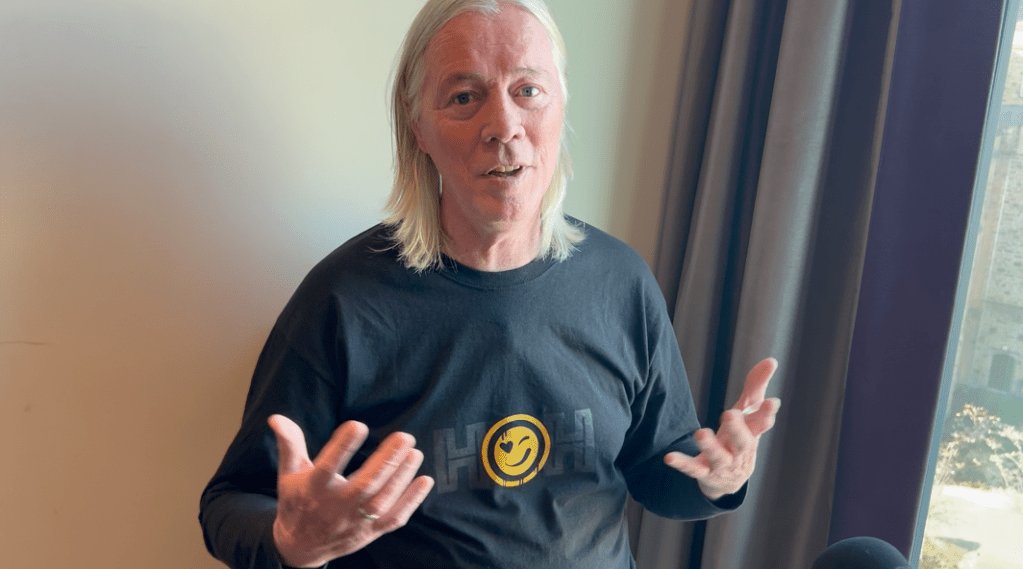
Tommy finished the interview, looking straight to the camera,
“I’m still hoping. Never give up hope. Never give up your dreams, in fact follow your dreams! They know the way.”
Tickets are available for the next event here.
 Let's Talk Music!
Leave a comment